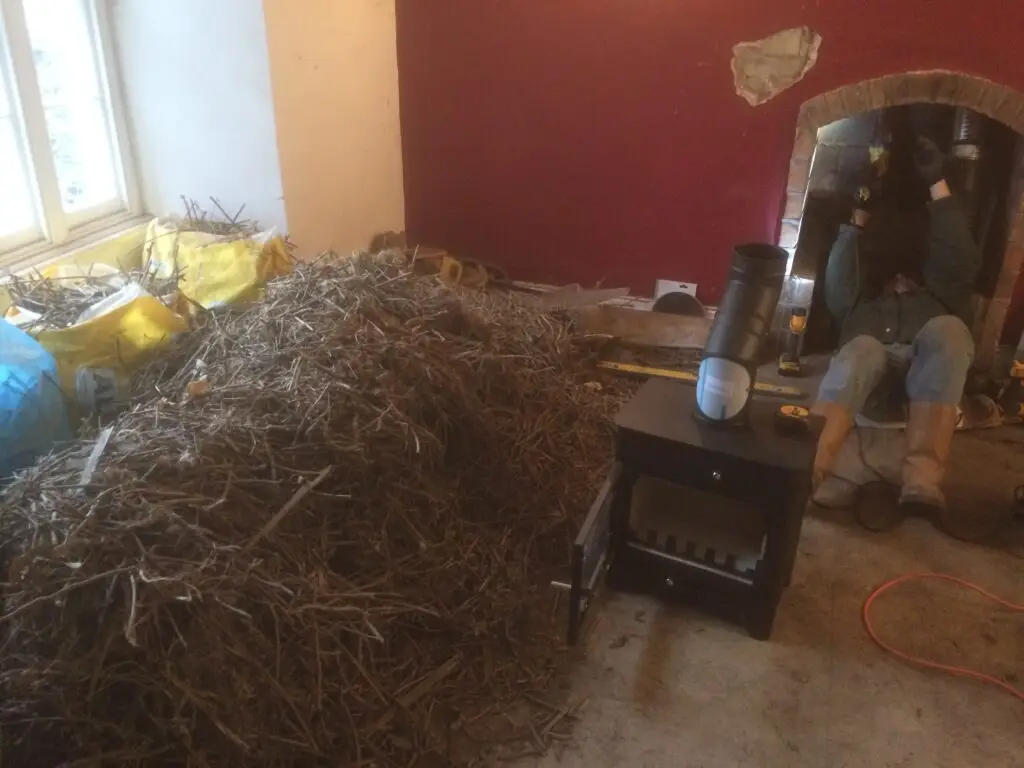
Blocked or Damaged Flues
A blocked chimney flue can stop a stove installation in its tracks.
From birds’ nests and rubble to collapsed clay liners, blockages are one of the most common issues we encounter.
Some clear easily, others need us to open up the chimney in places like a loft or bedroom.
And sometimes, clearance just isn’t possible – which is why stove choice and flue liner size can make the difference between a smooth installation and a failed one.
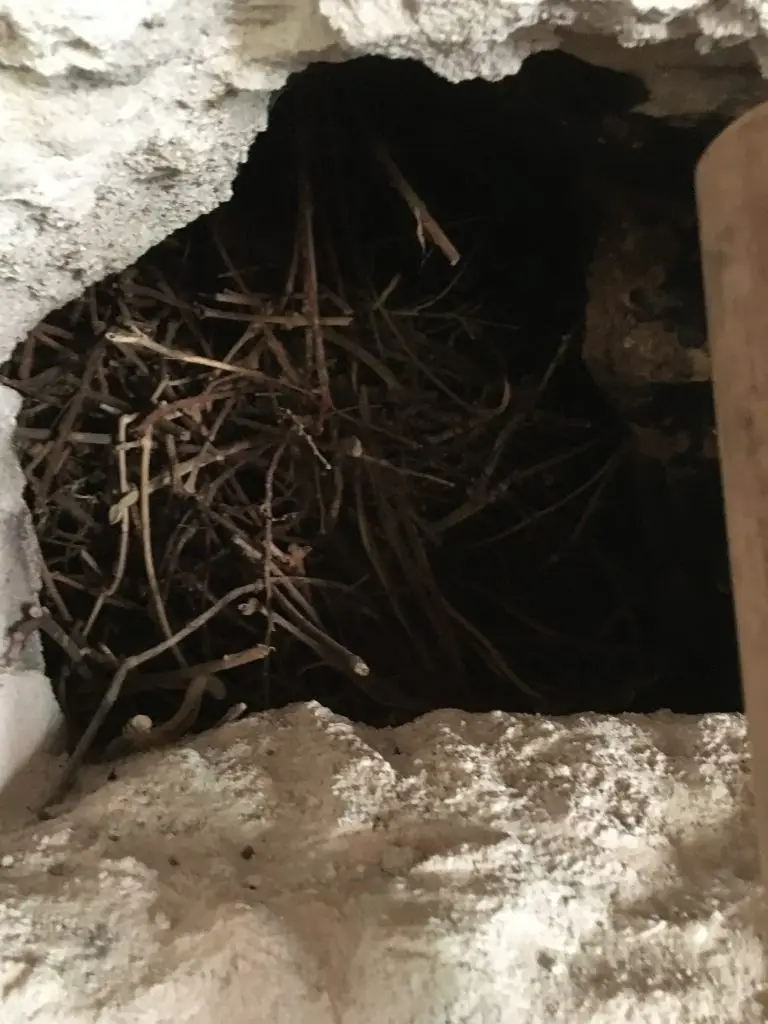
Blocked or Damaged Flues
A chimney flue must be clear and safe before a new flexible liner can be fitted. Sometimes that’s straightforward – other times hidden obstructions get in the way.
Common blockages include rubble from old brickwork, birds’ nests, or sections of disjointed clay liners.
In simple cases these can be cleared quickly.
In more complex cases we may need to break into the chimney breast at points other than the fireplace opening (for example in a bedroom or loft) to remove the obstruction. Once cleared, we patch the opening and bring the wall back to a plastered finish ready for you to decorate.
The time we spend on clearing and making good is chargeable. We always check the flue condition before fitting a stove – and we won’t proceed until it’s safe.
Sometimes, though, a blockage simply can’t be cleared – and that’s where stove choice and liner size make the difference between success and failure.
Why Flue Diameter Matters
Flexible flue liners are usually fitted in either 6″ (150mm) or 5″ (125mm) diameters. On paper, bigger sounds better – but in practice, it’s often the opposite.
6″ liners are bulkier and more prone to snagging on bends, offsets, and rubble inside the chimney. We’ve had multiple liner failures over the years where 6″ simply wouldn’t pass.
5″ liners are slimmer, easier to feed, and far more likely to succeed in a tight or obstructed flue. In over 12 years of installations we’ve only ever had one 5″ failure, compared to multiple 6″ failures. On many occasions, a 5″ liner has gone through where a 6″ would never have worked.
This isn’t just theory – in our busy mid-winter season, this is a weekly occurrence.
Choosing the Right Stove
Not every stove can legally or safely run on a 5″ liner. Some models require 6″, others are approved for 5″. The choice of stove makes all the difference.
If you choose a stove that works on a 5″ liner, you’ve got the best chance of a smooth, successful installation.
If you insist on a stove that requires 6″, you risk extra costs – whether that’s opening up the chimney, abandoning the install (and paying for our time and any damaged liner), or redesigning the install completely.
The simplest and most cost-effective option is to let us advise you on stoves that are suitable for 5″ liners. It saves risk, saves time, and keeps the project moving forward.
Our Process
- We always attempt to clear blockages safely first.
If clearance is straightforward, the install proceeds as planned.
If we hit a problem, we’ll explain your options:
Extra work to clear the chimney (chargeable).
Swapping to a stove suitable for a 5″ liner.
Abandoning the install, with costs for our time and any damaged liner.
Key Takeaway
Blockages are common – but the liner diameter and stove choice often decide whether they’re a minor hiccup or a deal-breaker. With our experience, we can guide you towards the right stove and liner combination so your installation goes ahead without unnecessary risk or cost.