
Wood Burning Stove Installation Cost Breakdown – What Affects the Price?
No smoke and mirrors – just a clear breakdown of what affects price.
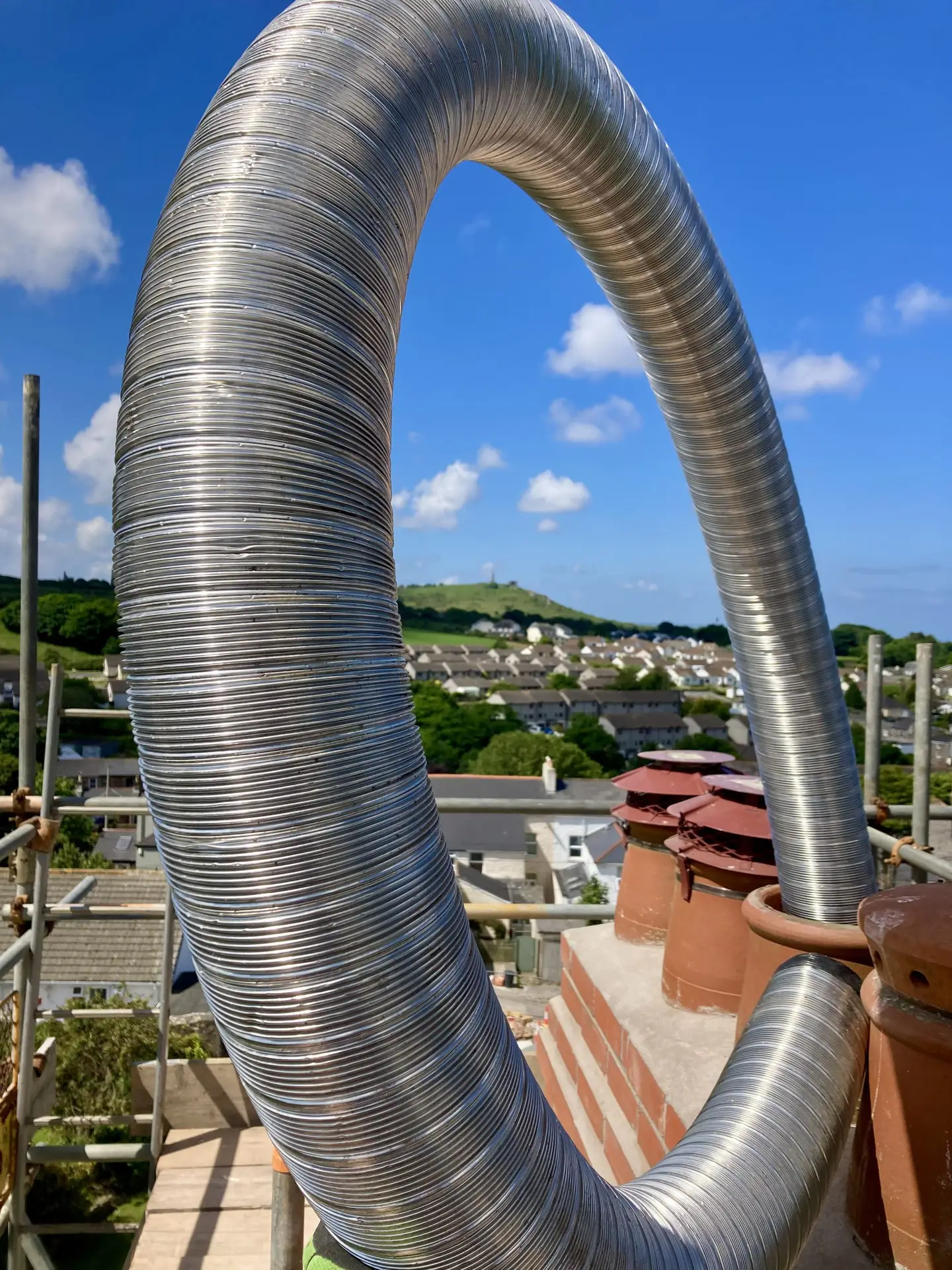
Whether you’re opening up an old fireplace for a flexible liner installation or building a new twin wall system from scratch, the costs can vary widely.
From structural work and rubble removal to labour, access, and materials, there are several factors that influence the final price.
Two jobs may look similar on the surface, but the detail is what makes the difference.
Our Pricing Guide
To see what we charge for various installations and projects, look at our Blazing Burners Pricing guide.
Fireplace Prep Work
Structural work: Knocking out a builder’s opening or enlarging a fireplace often means installing a new lintel – concrete or granite, depending on the job. Wider or taller openings require more prep and materials.
Rubble removal: Every knockout creates rubble – sometimes a handful of bags, sometimes forty or more. Access (stairs, narrow lanes, skips vs van loads) makes a difference.
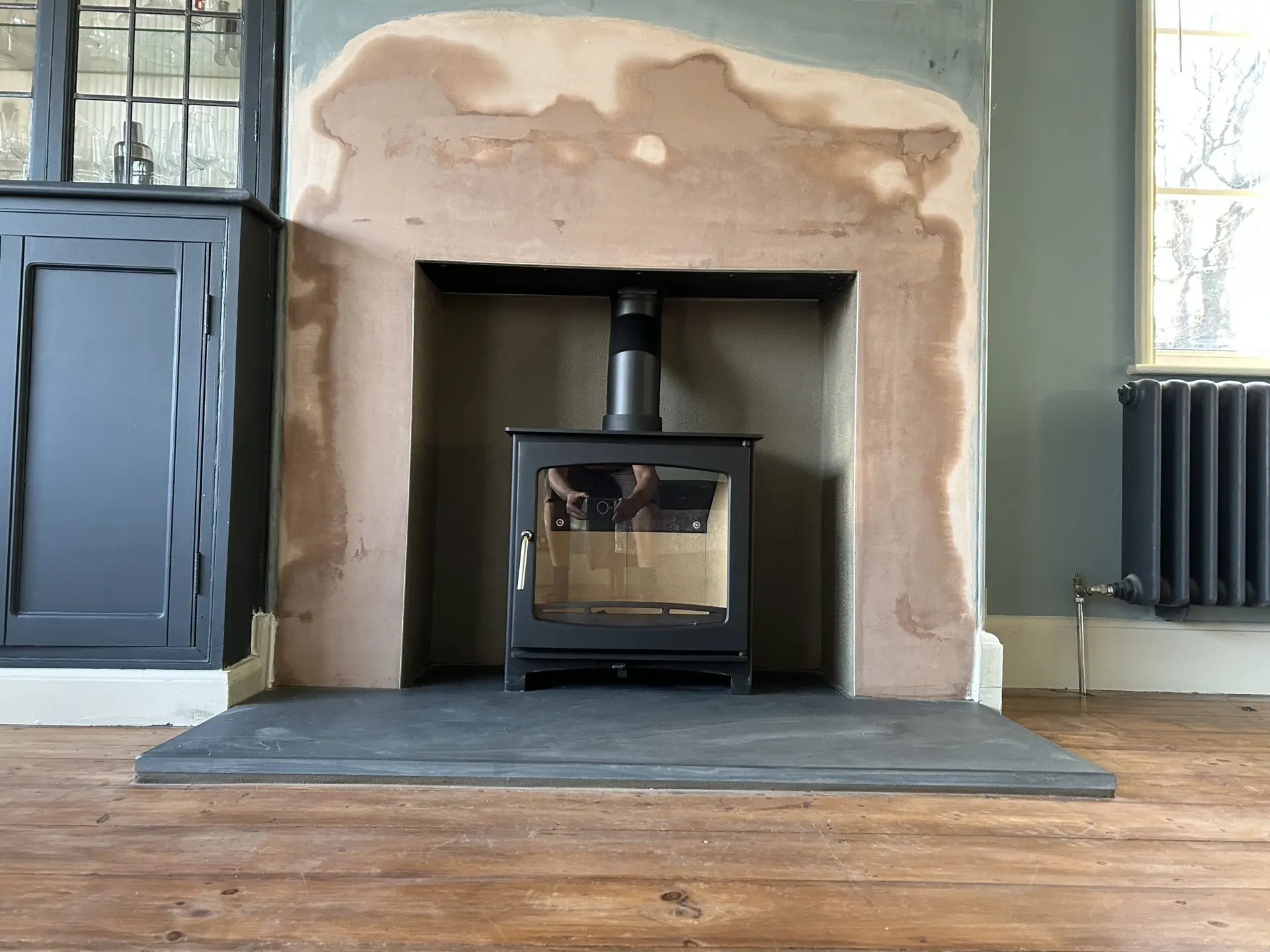
Hearth materials: Standard riven slate is included in many installs, but alternatives (granite, polished slate, tiled hearths, raised hearths) increase both labour and material costs. Larger fireplaces may need 120cm x 90cm slabs cut to size, while smaller openings can use pre-cut blanks.
Chamber finishes: Plain render and skim is the simplest. Brick slips, chamber panels, or tiling cost more in both labour and materials.
Beams & surrounds: Oak beams, stone lintels, or full surrounds all change the look and add cost. Beams are only fitted after lintels are in place, so structural and decorative choices often tie together.
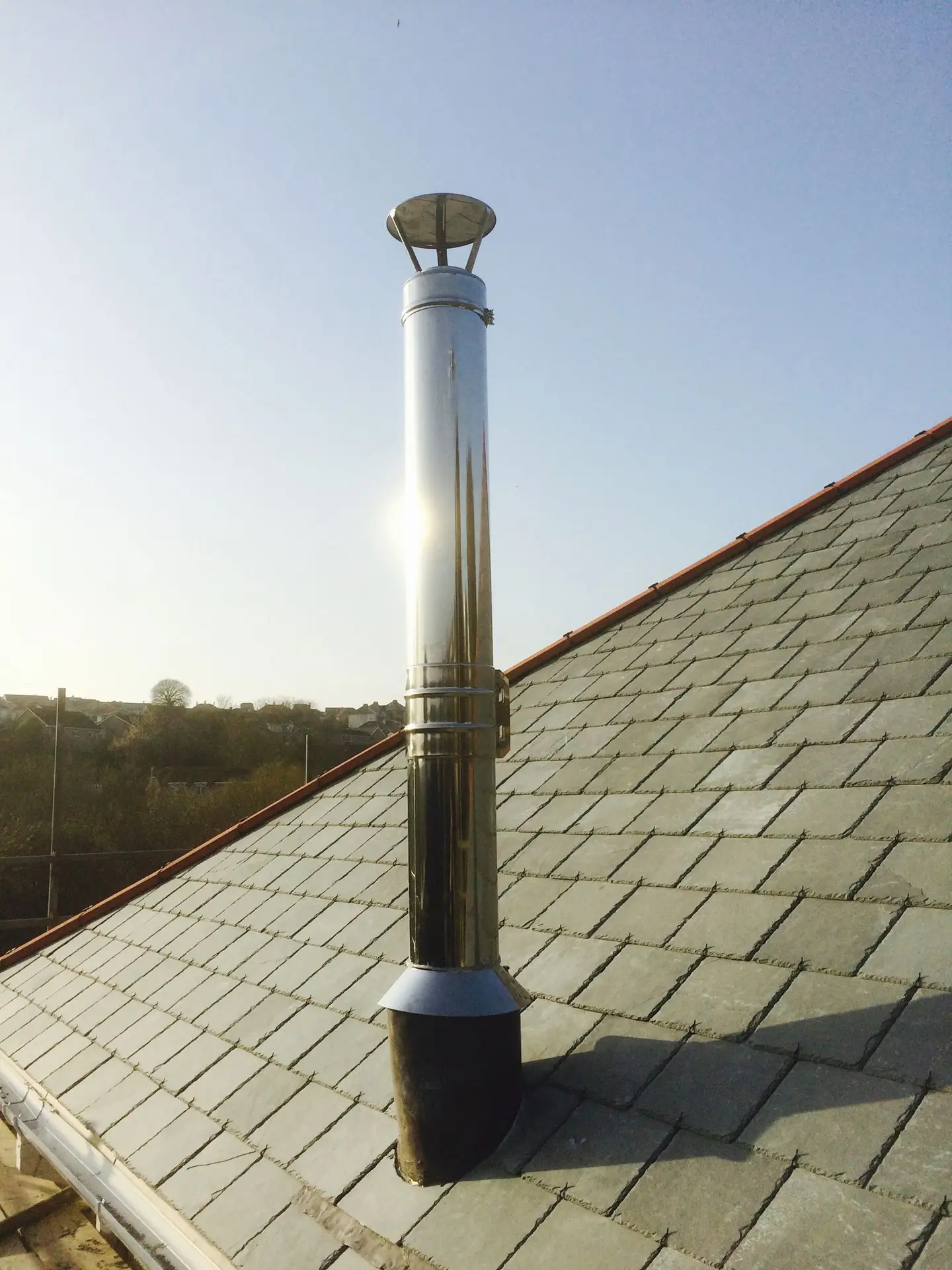
Twin Wall Systems
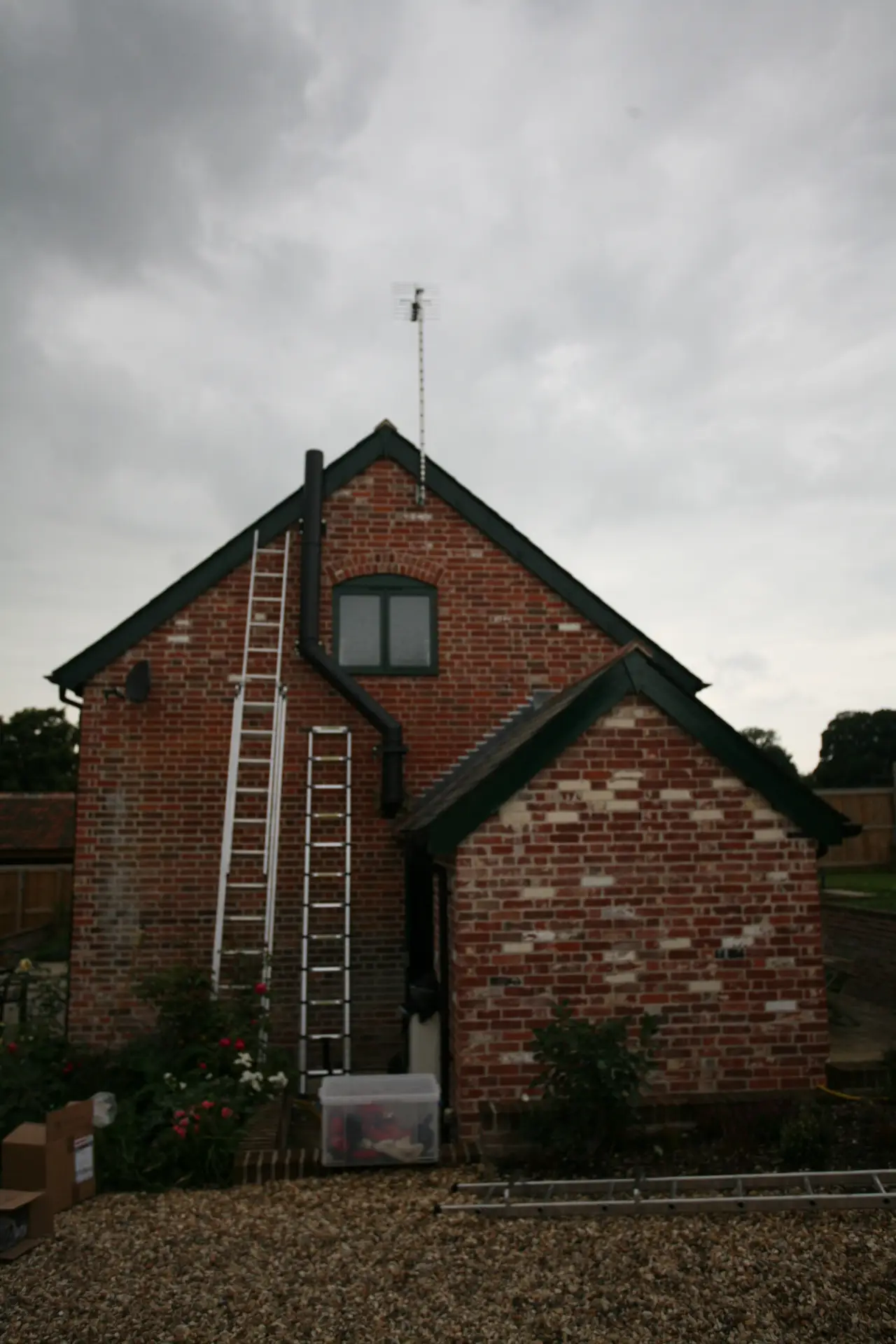
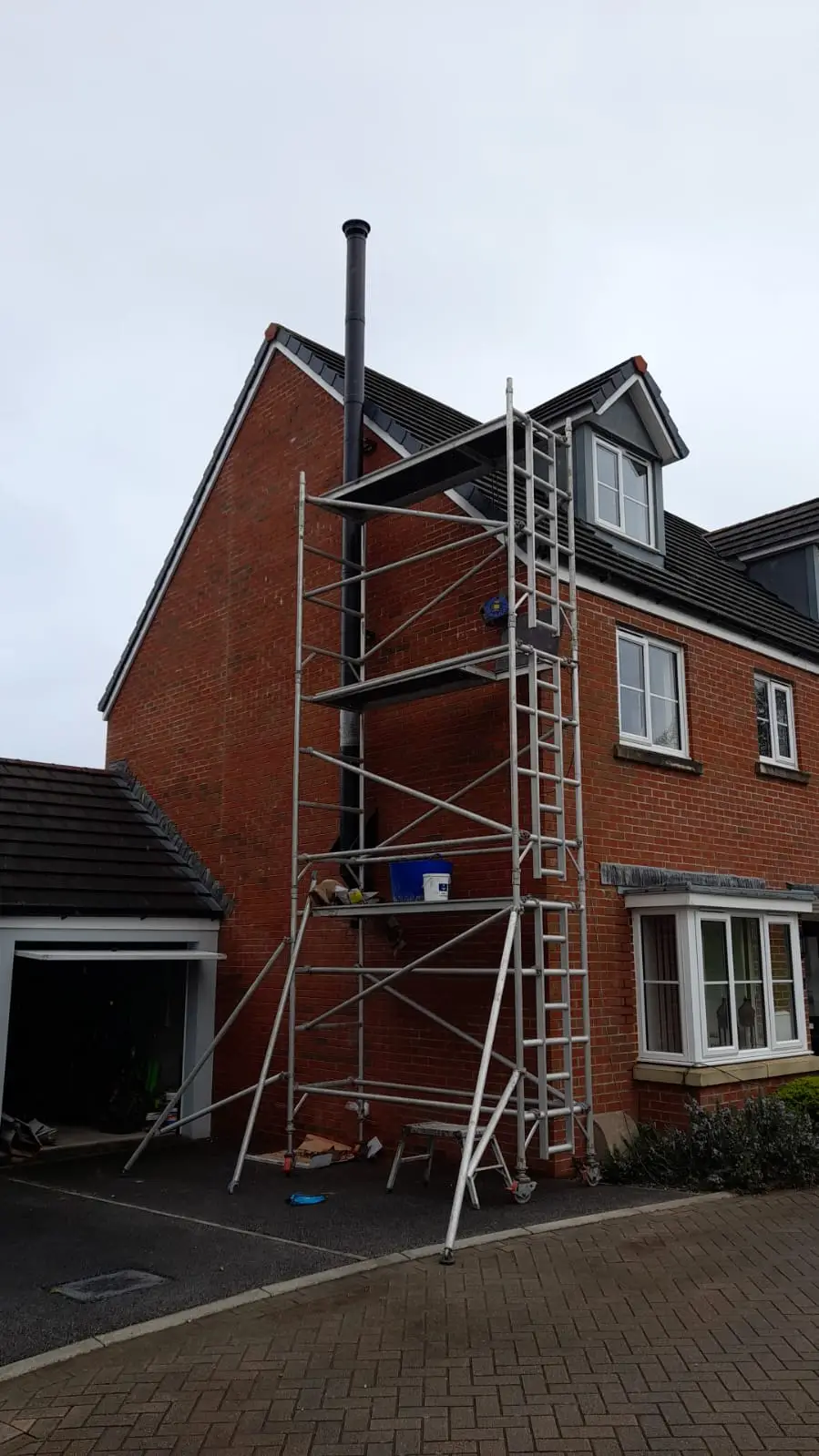
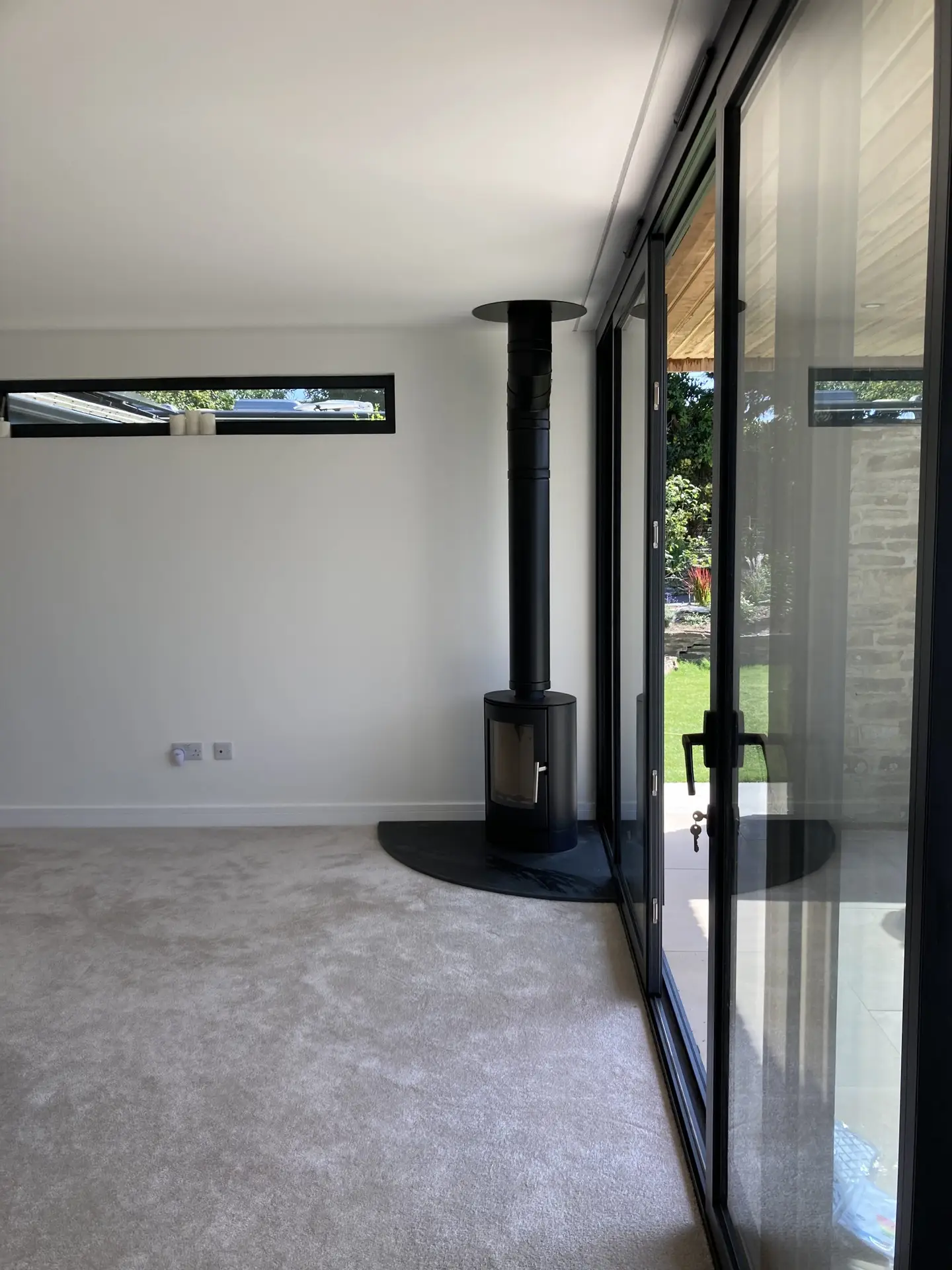
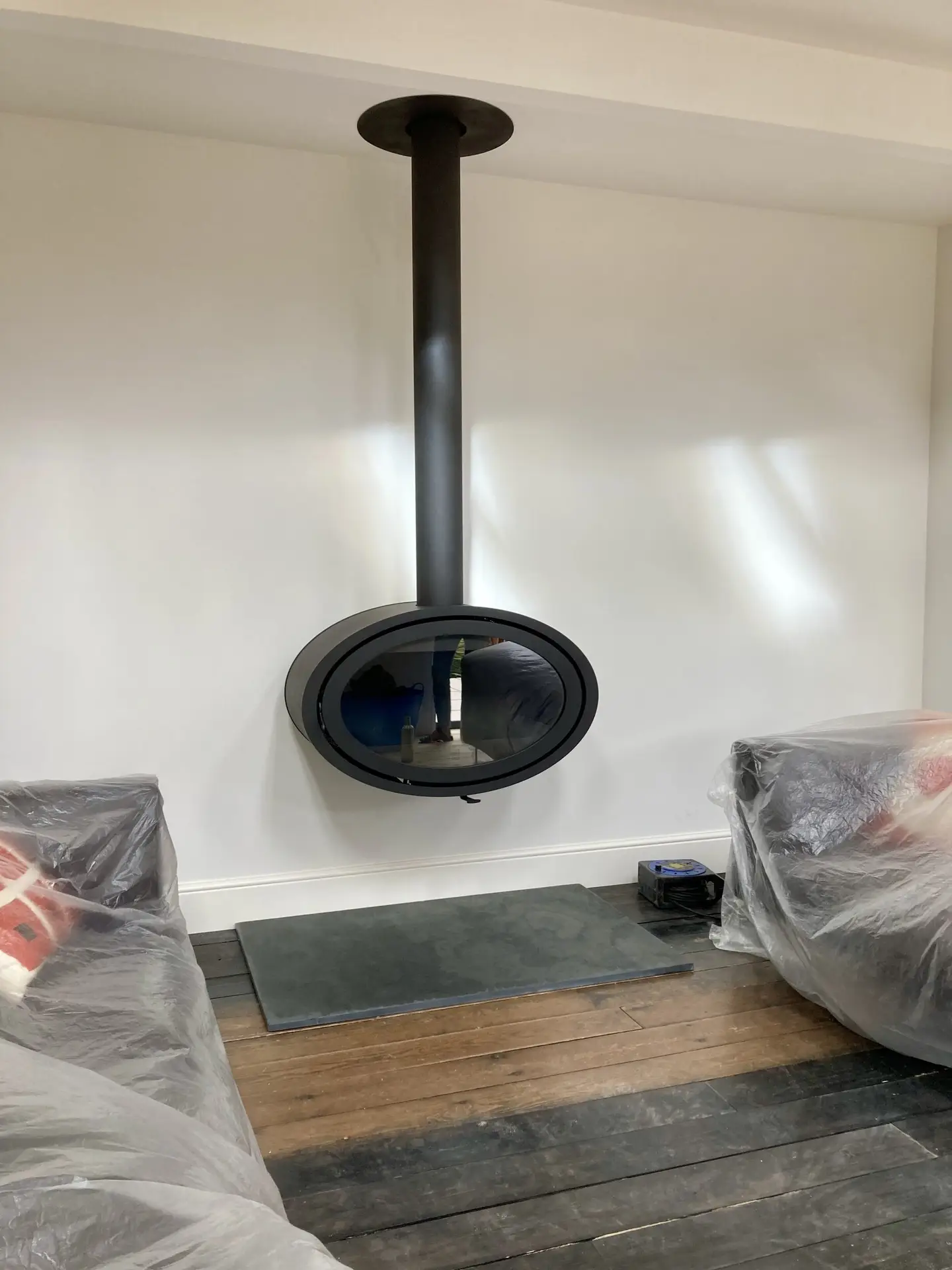
Internal vs external: Internal runs are often more efficient but involve more disruption (cutting through floors/ceilings). External runs are simpler but need weatherproofing and supports.
Floors & height: A single-storey bungalow system is faster and cheaper than a two- or three-storey property, which requires extra pipe, supports, and access equipment.
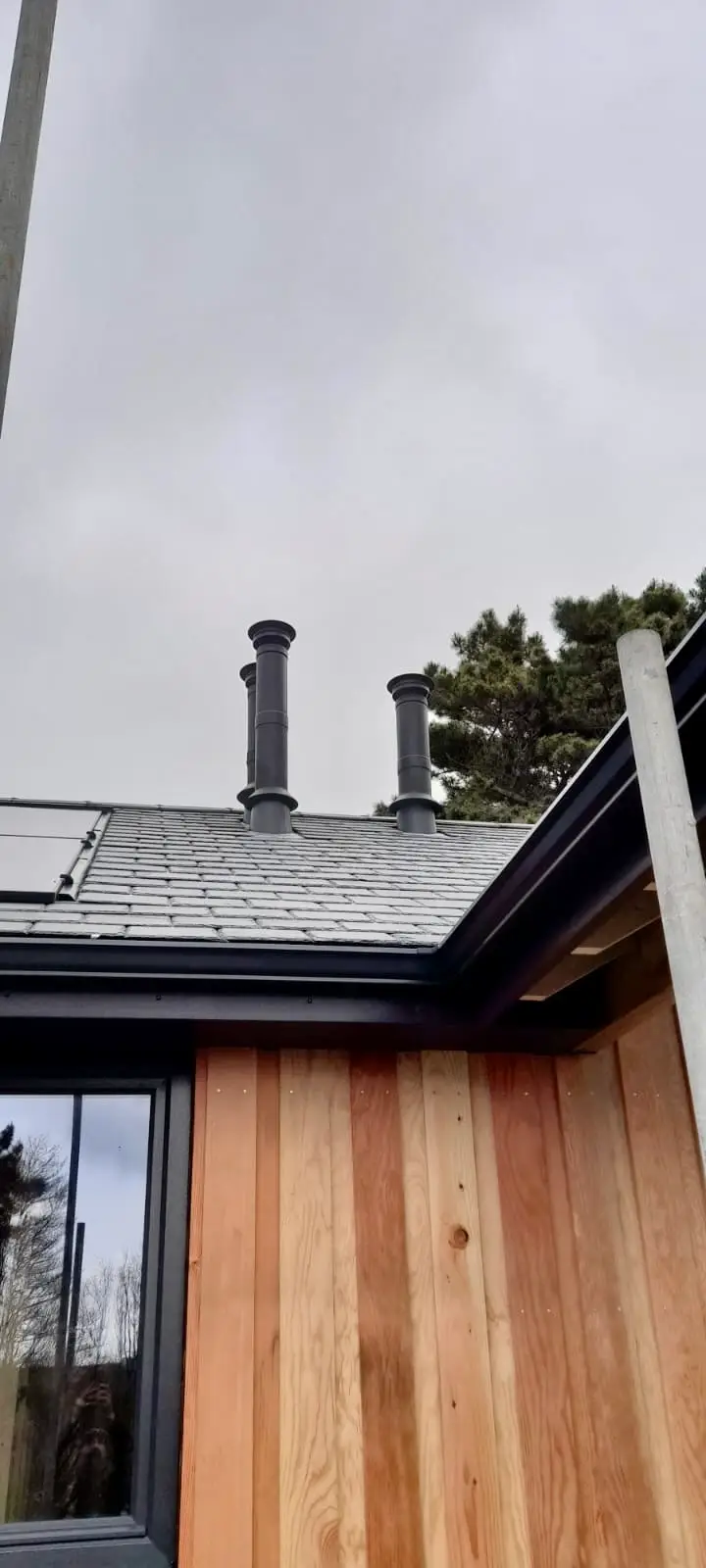
Colour choice: Black twin wall is our standard recommendation. The powder-coated surface offers better protection against Cornwall’s salty sea air and coastal conditions, and while it’s slightly more expensive than plain stainless/chrome, it gives a longer-lasting finish.
Bends & offsets: A straight flue is cheapest. Extra bends (to avoid rafters, soffits, or overhangs) add cost – both for fittings and labour.
Supports & fixings: Brackets, base supports, and wall bands vary depending on whether the system is internal or external.
Labour
Skilled labour is the biggest part of most installations.
Time on site depends on whether we’re knocking out fireplaces, pouring hearth bases, running twin wall systems, or tiling chambers.
Work includes demolition, making good, stove fitting, commissioning, certification, and cleanup.
Complex builds (tiled chambers, large beams, long twin wall runs) require extra days, which increases cost.
Access
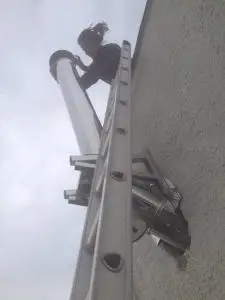
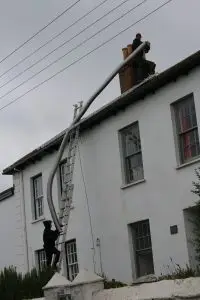
Ladders may be fine for simple bungalow jobs.
Tower scaffolds are often used for two-storey internal or external installs.
Full scaffold or a cherry picker may be required if roof pitch, height, or site conditions make safe access difficult.
Access requirements can add significantly to the overall cost, especially for taller properties or restricted sites.
Stove Choice
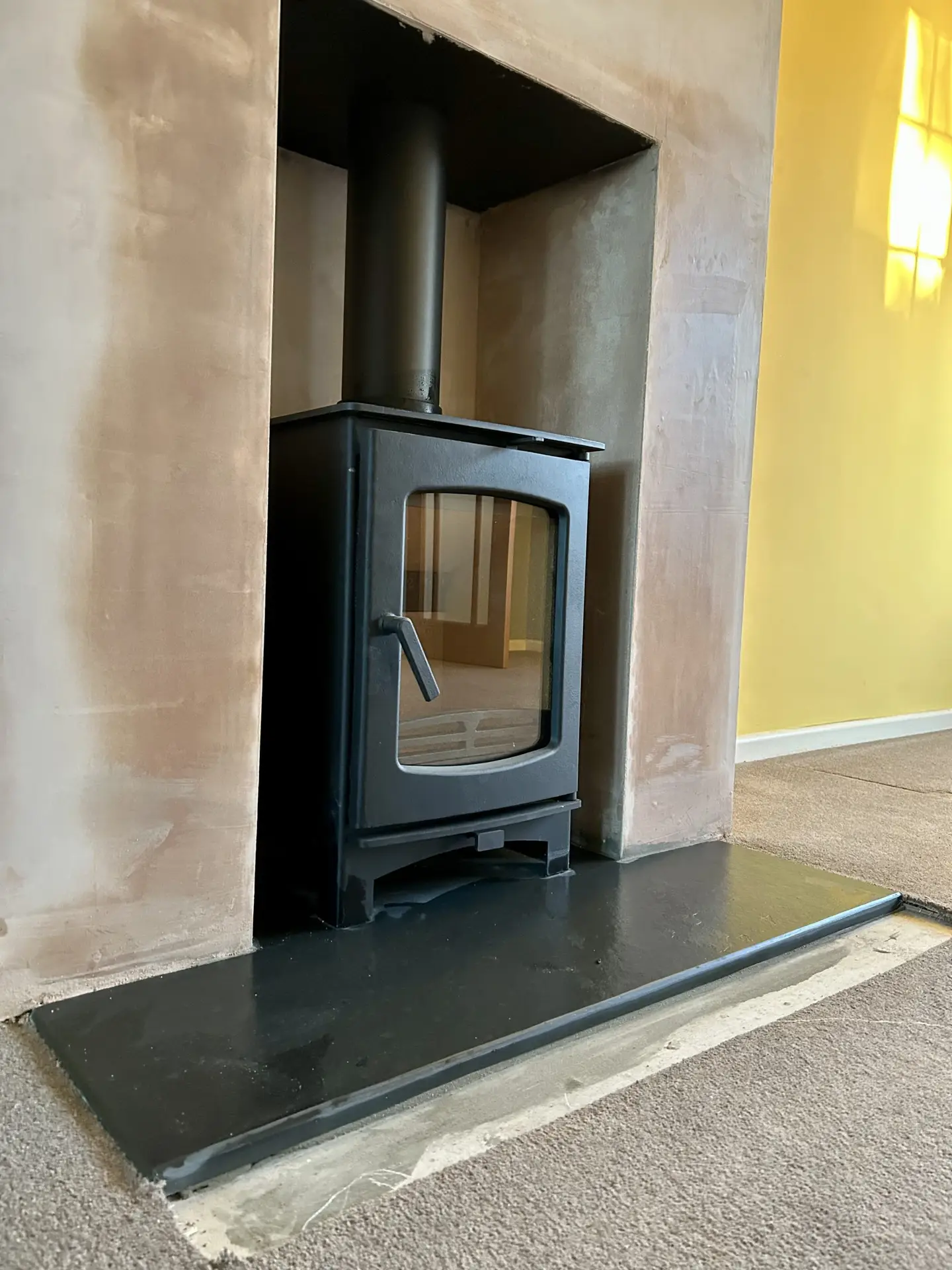
Entry level/Budget stoves start at around £500.
Premium brands, larger outputs, or designer models can add £1,000–£2,000 or more.
Your stove choice also dictates flue size (5″ vs 6″), which can affect liner cost, twin wall diameter, and installation complexity.
Other Factors
Chimney condition: cracked pots, blocked flues.
Compliance: certification, CO alarms, and data plates are always included as standard.
Free estimates
For your detailed and free estimate, contact us today.