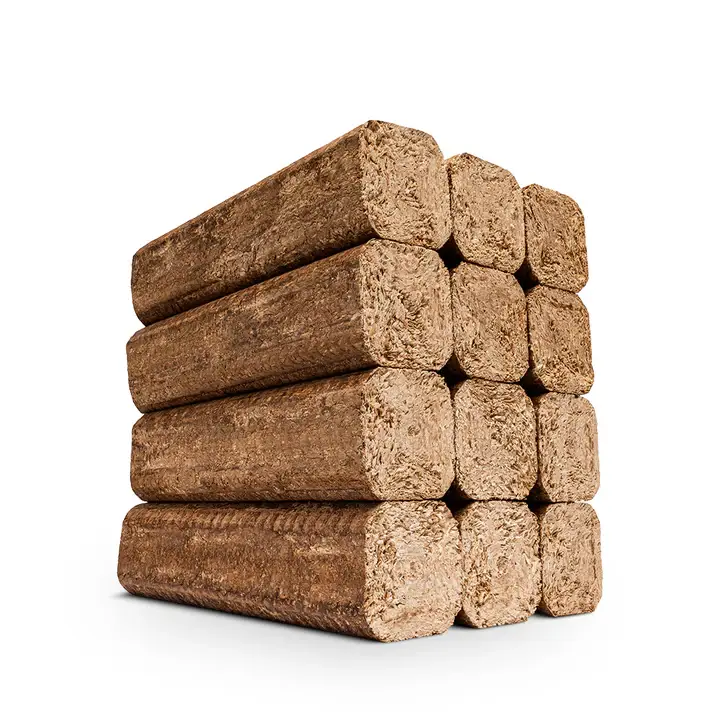
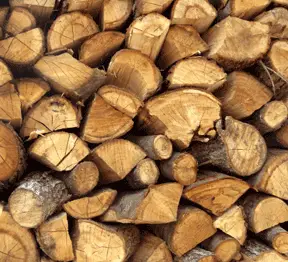
Both eco-logs (briquettes) and traditional firewood have their place. Many stove owners find the sweet spot is using a mix of the two.
Eco-Logs
Made from compressed sawdust and wood shavings.
Consistent size, easy to stack and store.
Burn hot and clean, leaving little ash.
Must be stored bone-dry – even small amounts of moisture will ruin them.
Best value when bought in bulk.
Firewood
The traditional choice – seasoned or kiln-dried hardwoods are best.
More variation in log size and burn time.
Needs more storage space and good ventilation.
Kiln-dried logs burn hotter and cleaner than seasoned, but cost more.
Which is better?
There’s no clear winner – it depends on your setup and priorities:
Eco-logs give more consistent performance, but storage is critical
Firewood is cheaper if you have space and can buy in bulk
Many customers light with eco-logs and then switch to hardwood logs for the main burn
Environmental Impact
Both eco-logs and firewood are considered carbon neutral when sourced responsibly. Eco-logs often get the eco edge – they’re made from sawdust and offcuts that would otherwise go to waste, provided they’re pressed without chemical binders. Firewood is just as sustainable if it comes from responsibly managed woodland, though kiln drying adds an energy cost.
The Bottom Line
If you’re short on space or want consistency, eco-logs are hard to beat
If you’ve got storage and buy smart, bulk firewood can save you money
Using both together often gives the best of both worlds – quick, clean starts with eco-logs and steady, economical burns with hardwood logs