Flue Liner Grades Explained
Flue liners come in a variety of grades, depending on the material, construction, and intended use – such as fuel type, temperature, and the surrounding environment.
Flexi Liners
Flexible flue liners are often used in domestic chimneys. They have been tested and approved to demonstrate how they perform in particular settings are defined by their product designation number. The more robust liners will have better designations. So if you see a cheap liner (sold per meter), there’ll be a good reason for it, so don’t be fooled by price.
Although there are dozens of manufacturers producing flexible flue liners, there are only around 8 to 12 core manufacturers in the UK market. Of those, we’d only confidently recommend 3 or 4. Our preferred manufacturer for the liners we install is Dura Flue (Flue & Ducting) – their quality, consistency, and performance stand out from the rest.
The difference in quality between one manufacturer and another is very real. Some liners tear easily, unravel, compress too easily, or simply don’t perform well over time. Choosing the right liner isn’t just about certification – it’s about durability, safety, and long-term performance.
Most liners are made from various metals. The general chemical makeup includes:
Chromium, Nickel, Molybdenum & Copper. But the amounts of these metals provided by manufacturers varies. The makeup will define the type and quality of the liner.
Below is a breakdown of the main grades you’ll come across, especially for flexible stainless steel flue liners.
Flue Liner Grades Explained
Flexible flue liners are commonly used in domestic chimneys and come in a range of grades depending on their material, construction, and intended use. These factors are influenced by the type of fuel being burned, the operating temperatures involved, and the environment surrounding the flue system.
Each liner is given a product designation number that indicates how it performs under certain tested conditions. The more robust and higher-quality liners have stronger designations. If you come across a cheaper liner sold per metre, there’s usually a reason for the lower price – it may not meet the same durability or safety standards. So while it may be tempting, don’t be misled by price alone.
Although there are many brands selling flue liners in the UK, there are only around 8 to 12 core manufacturers supplying the market. Of these, we would only confidently recommend 3 or 4 based on the consistency and performance of their products.
Our preferred choice is Dura Flue (Flue & Ducting Ltd). Their liners consistently stand out due to their quality, reliability, and long-term performance.
From our own experience, the difference between one manufacturer and another can be very noticeable. Some liners are prone to tearing, unravelling, compressing too easily, or simply degrading too quickly over time.
Choosing the right liner isn’t just about having the right certification – it’s about ensuring long-term durability, safety, and peace of mind.
Most stainless-steel flue liners are made using a combination of metals. These typically include chromium, nickel, molybdenum, and copper. Each metal plays a different role – for example, chromium helps with corrosion resistance, and molybdenum improves durability in acidic environments.
However, the exact proportions of these metals vary between manufacturers. This variation affects not only the liner’s performance but also its classification and lifespan.
Below is a breakdown of the most common flue liner grades you’re likely to come across.
316L Stainless Steel Flue Liner
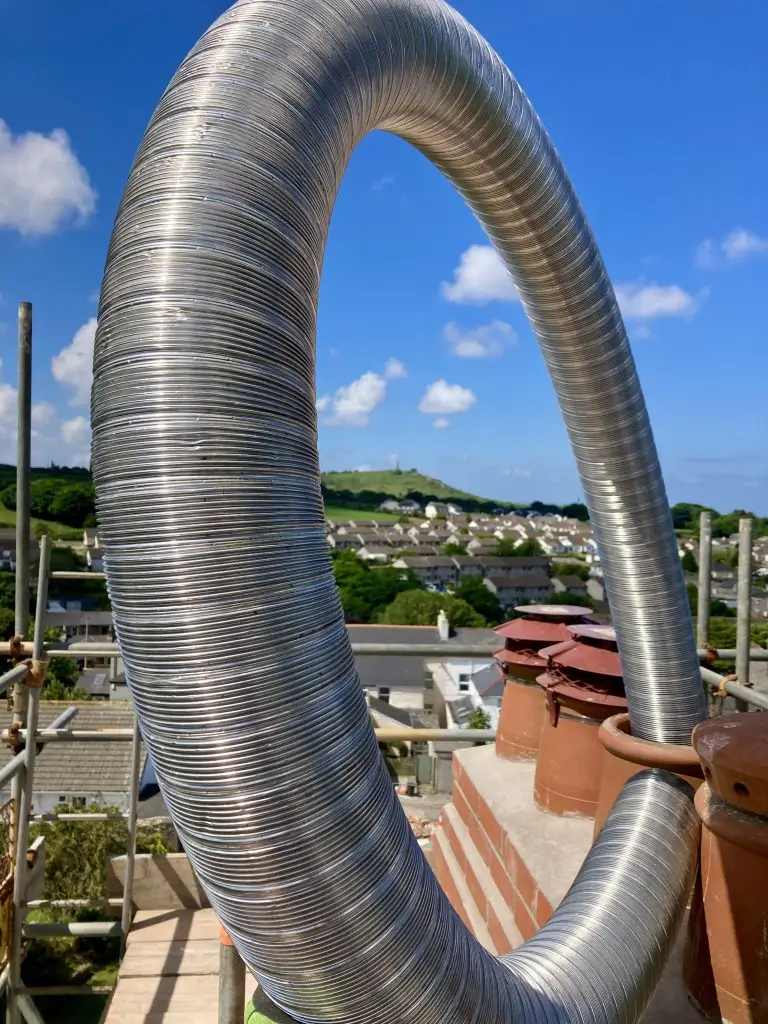
This is a standard grade flue liner made from stainless steel with a low carbon content. It offers good resistance to corrosion and is commonly used with gas, oil, and dry wood-burning appliances. It’s a reliable, cost-effective option but may degrade faster when used with wet or acidic flue gases (like from unseasoned wood or multi-fuel stoves). It’s not recommended for heavy or prolonged use in harsh conditions.
But used correctly, it is an excellent choice, especially if the quality of the grading is not compromised – as with Dura Flue liners.
904L Stainless Steel Flue Liner
904L is a higher-grade stainless steel with added elements like nickel, molybdenum, and copper. These give it excellent resistance to corrosion, especially from acidic condensates found in wood and multi-fuel burning. It’s more durable and longer lasting than 316L. It costs more but offers a better lifespan, especially in installations where smokeless fuel is being considered.
For a 2-storey house installation, expect to pay an extra £200 to upgrade from a 316L grade.
W3G Rated Flue Liner
“W3G” is not just a type of steel but a performance rating.
We understand that there are about only 4 of the major players producing W3G liners.
A W3G liner is made from high-grade stainless steel (often 904L or better) and is tested and certified to meet strict standards:
- W = Suitable for wet operation (condensation present)
- 3 = Highly resistant to corrosion from flue gases
- G = Soot fire resistant (can withstand a chimney fire)
A W3G-rated liner is the best all-round option, considered suitable for all fuels, and safe for use in both dry and wet chimney systems. It’s the most expensive of the three but offers maximum safety, flexibility, and durability.
For a 2-storey house installation, expect to pay an extra £400 to upgrade from a 316L grade.
In summary
- We recommend Dura Flue’s 316L for our wood burning customers.
- If you want complete peace of mind and longevity, upgrade to W3G.